So the goal isn’t only to kill the germs on your child’s hands, but to get them off. That means washing with soap and water when a sink’s in reach, choosing a product that actually lifts grime away when it isn’t, and keeping a few simple habits going so clean hands become the default.
I write about what families breathe and touch indoors, and I’ll be straight with you: how to keep kids hands clean is the highest-return, lowest-cost move you can make for a kid’s health. It mostly comes down to soap, twenty seconds, and one idea the hygiene aisle keeps glossing over.
TL;DR Quick Answers
How to keep kids' hands clean
The most reliable way to keep kids' hands clean is to physically remove germs, dirt, and oil from the skin, not just kill them in place.
At home: Soap and water with about 20 seconds of scrubbing lifts germs off and rinses them away. Still the gold standard.
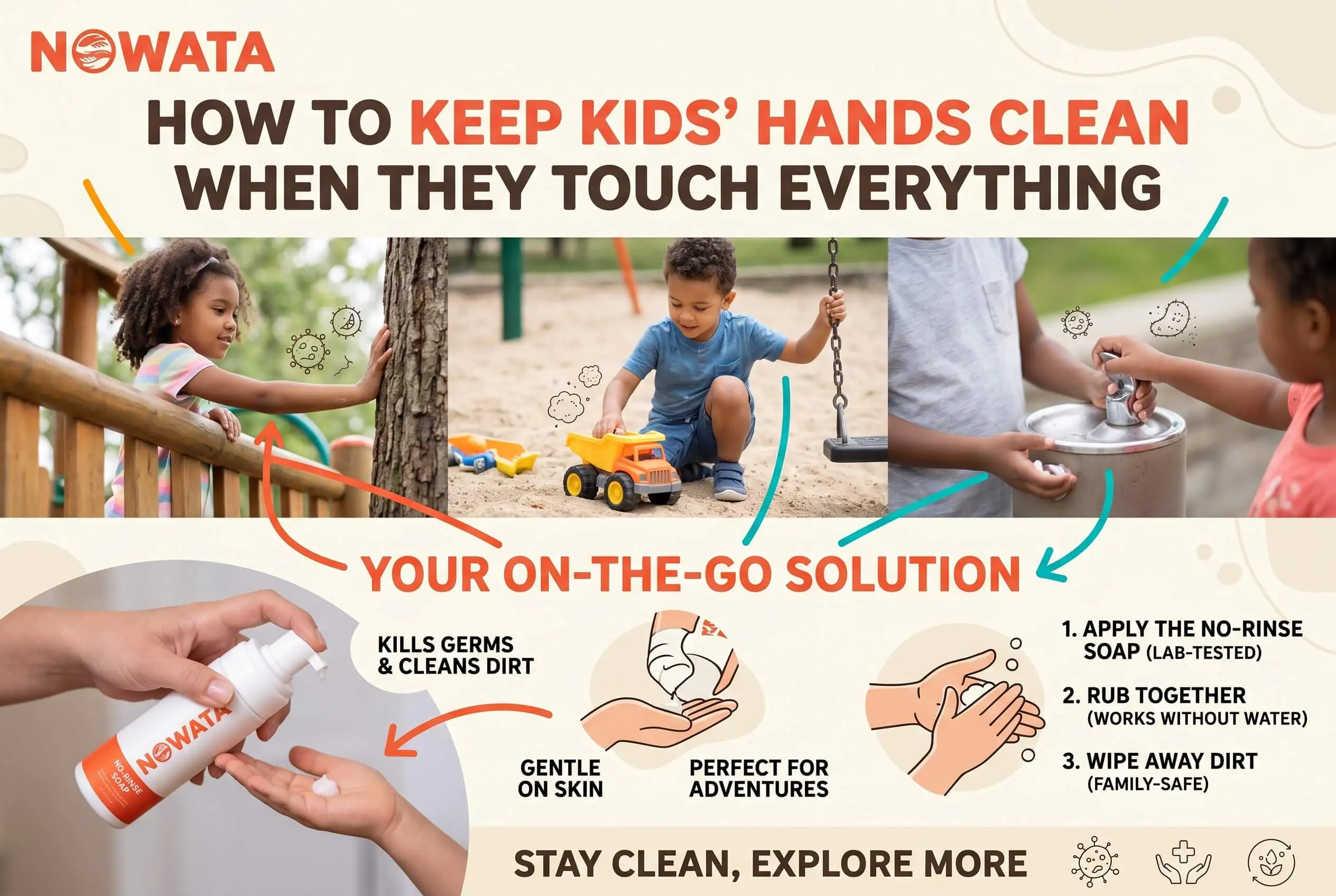
On the go: With no sink, use a rinse-free, plant-based soap that lifts grime into clumps you brush off, instead of a sanitizer that leaves dead germs and residue on the skin your child is about to eat with.
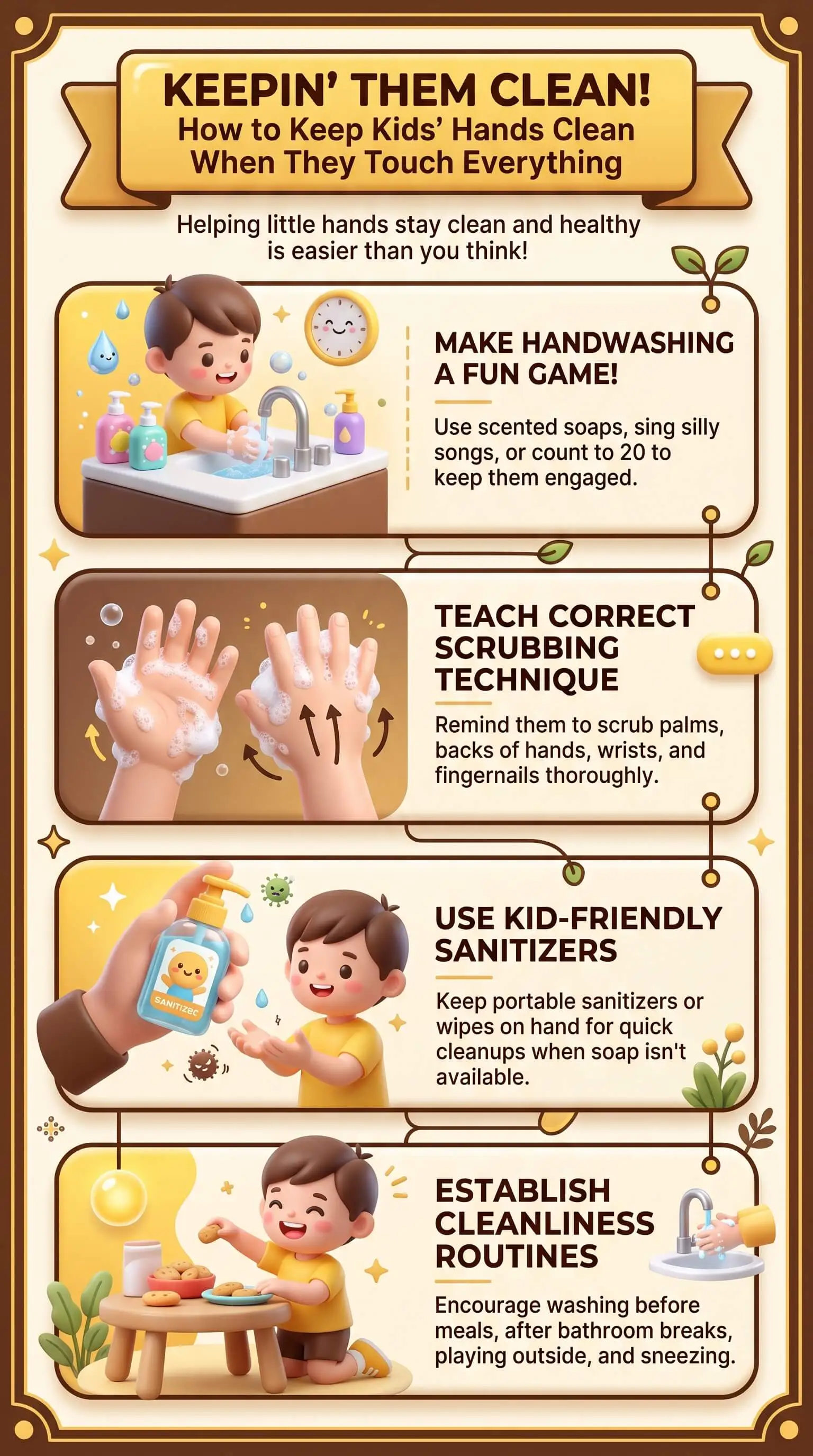
Wash at the moments that matter: before eating, after the bathroom, after playgrounds or pets, and after coughing or sneezing.
Skip what underperforms: sanitizer is weak on visibly dirty hands, and wipes mostly smear grime around.
Bottom line: the question isn't whether you killed the germs, it's whether you got them off.
Top Takeaways
Killing germs and removing them aren’t the same thing. Removal gets the dead germs, dirt, and residue off the skin. Killing alone leaves them there.
Wash at the key moments, not on a clock: before eating, after the bathroom, after playgrounds and pets, after coughing or sneezing, and after public places.
Soap and water for about 20 seconds is still the gold standard when a sink’s available.
No sink? Choose a product that removes grime, not just sanitizer that coats it. Rinse-free, plant-based soaps fill that gap.
Read the label. No alcohol, parabens, or phosphates, and nothing you’d mind your kid tasting.
Killing Germs and Removing Them Aren’t the Same Thing
Picture a muddy floor. You can spray disinfectant and kill everything living in the mud, and you’re still standing in mud. Hand sanitizer works about the same way on little hands. It neutralizes a lot of germs in place, but the dirt, oil, and residue stay on the skin. Soap and water take a different route, using friction and suds to bind to the grime and lift it off so it washes away for good. That physical removal is what the CDC recommends first, and it’s why a real wash beats a quick squirt of gel almost every time.
When Kids Should Wash Their Hands
You don’t need a kid scrubbing on the hour. You need clean hands at the moments germs actually move:
Before eating or handling food
After the bathroom
After playgrounds, parks, or shared surfaces
After coughing, sneezing, or blowing their nose
After touching animals or pets
Coming home from school, daycare, or anywhere public
Kids explore by grabbing the world and bringing it to their faces. That’s part of this stage of childhood, and young children touch their faces constantly. You won’t stop it, and you shouldn’t try. Just make sure the hands are clean when it happens.
How to Wash Kids’ Hands the Right Way
When a sink’s available, soap and water still win. The steps match what the CDC recommends:
Wet hands with clean, running water, warm or cold.
Add soap and lather the backs, between the fingers, and under the nails.
Scrub for about 20 seconds. A short song sung twice keeps the timing honest.
Rinse well.
Dry with a clean towel or air dry.
The CDC ties that 20-second scrub to lifting away most germs, and it’s the step kids rush every single time. A song fixes that faster than a stopwatch.
Clean Hands When There’s No Sink
Real life happens away from sinks: the car after practice, the picnic table, the school lunch line. A sanitizer with at least 60% alcohol works in a pinch, but it’s less effective on visibly dirty hands and leaves everything it kills sitting on the skin. A newer option closes that gap, with rinse-free, plant-based soaps that lift dirt and germs into clumps you brush away, no water needed. If you want gentle, kid-safe options that remove grime instead of just coating it, this guide to safe, plant-based, chemical-free hand soap for kids is a good place to start.
Picking a Product Worth Trusting
Three questions sort the good from the gimmicky. Does it remove germs or only kill them in place? Can you read and recognize every ingredient, with no alcohol, parabens, or phosphates hiding in the list? And would you be fine with those fingers going straight into a mouth afterward? If a product can’t clear all three, keep looking.
A few daily habits carry the rest: short fingernails, a quick wipe of phones and doorknobs, and a wash-before-meals rule nobody has to think about.
"I’ve come around to one idea that reframes this whole topic. The question isn’t whether you killed the germs on your kid’s hands. It’s whether you got them off. Once you start thinking in terms of removal instead of killing, the daily choices get simpler. Wash with soap when you can, pick a product that lifts grime away when you can’t, and stop chasing a perfect count. Clean hands at the right moments do the real work."
7 Essential Resources
CDC: About Handwashing. The five steps and the moments that matter, from the source everyone else cites.
CDC: Hand Hygiene FAQ. The why behind the 20 seconds, plus straight talk on when sanitizer falls short.
CDC: Handwashing Facts and Statistics. The research, including how soap physically lifts germs off skin.
CDC: Free Handwashing Materials. Printable posters and reminders for the bathroom wall that kids actually respond to.
AAP HealthyChildren: Hand Washing, A Powerful Antidote to Illness. Pediatrician guidance written for the reality of parenting small kids.
Nemours KidsHealth: Hand Washing. A friendly walkthrough you can read together with your child.
WHO: Hand Hygiene (SAVE LIVES: Clean Your Hands). The global picture on why clean hands matter at home and at school.
Supporting Statistics
Soap could protect about 1 in 3 young children who get sick with diarrhea, and nearly 1 in 5 who get respiratory infections like pneumonia (CDC). The reason is mechanical: soap lifts germs off skin so they wash away.
Community handwashing education cuts respiratory illnesses like colds by 16 to 21 percent (CDC).
Regular handwashing drops school absences from stomach illness by 29 to 57 percent (CDC).
Final Thoughts and Opinion
After a lot of years covering family health, here’s the opinion I’ll stake out: the hygiene aisle has trained us to ask the wrong question. We compare alcohol percentages and “natural” labels and argue over which gel is gentlest, when the real question is plainer. What happens to the germs? They either come off your child’s skin or they don’t.
Soap and water get them off. The better no-sink options get them off too, by lifting and trapping grime instead of killing it and leaving it there. Most everything else is a compromise dressed up as a solution. Pick products that remove, build the habit early, and you’ve handled the part of kids’ health that’s genuinely easy to control.
Frequently Asked Questions
How long should kids wash their hands?
About 20 seconds, roughly two rounds of a short song. The CDC ties that number to lifting away most germs.
Is hand sanitizer safe for kids?
It’s fine in a pinch, with an adult watching, at 60% alcohol or higher. Two cautions: it works poorly on visibly dirty hands, and it leaves what it kills on the skin, which matters when little fingers head straight for the mouth. Soap and water, or a rinse-free soap that removes grime, are better when you have the choice.
How often should kids clean their hands?
At the key moments above rather than a set number. Consistency at the right times beats counting, and constant washing just dries out small hands. Just like air purifiers work best as part of a steady home-health routine, hand cleaning works best when it fits naturally into the moments that matter.
What kind of product is best for kids’ hands?
One that removes germs and grime rather than only killing them, with a short, recognizable, plant-based ingredient list and no harsh additives. The gentler it is, the more willingly kids use it.
Does frequent washing dry out kids’ hands?
It can, especially in winter. Use a gentle formula, pat hands dry instead of rubbing, and add a kid-safe moisturizer if skin starts to crack.
Make Clean Hands the Easy Choice
Your kid deserves hands that are actually clean, not just chemically treated. Start with a gentle, plant-based soap that lifts germs and grime away instead of leaving them on the skin your child is about to eat with. Take a look at safe, plant-based, chemical-free hand soap made for children and make clean hands the easy choice, sink or no sink.
