So is natural hand soap better for kids than regular soap? Not automatically. What makes a soap gentle on small hands is what the formula leaves out, and the word "natural" doesn't promise any of it. Nearly every bottle on the shelf claims something, whether it's natural, gentle, kid-safe or made with organic botanicals, which is exactly why so many parents stand there stuck.
I write about what families breathe and touch at home, and kids reach for hand soap many times a day. That's plenty of skin contact with whatever's in the pump. Read the label before you buy.
TL;DR Quick Answers
Best All Natural Non Toxic Hand Soap
The best all natural non toxic hand soap earns the title on its back label. For kids, that means a plant-based, fragrance-free formula with every ingredient listed and no antibacterial additives.
Full ingredient disclosure. Every ingredient is named, with no catch-all "fragrance" or "parfum" hiding the details.
Fragrance-free, essential oils included. Scent, natural or synthetic, is a leading cause of skin allergy in children.
No antibacterial actives. The FDA found they don't clean better than plain soap and water.
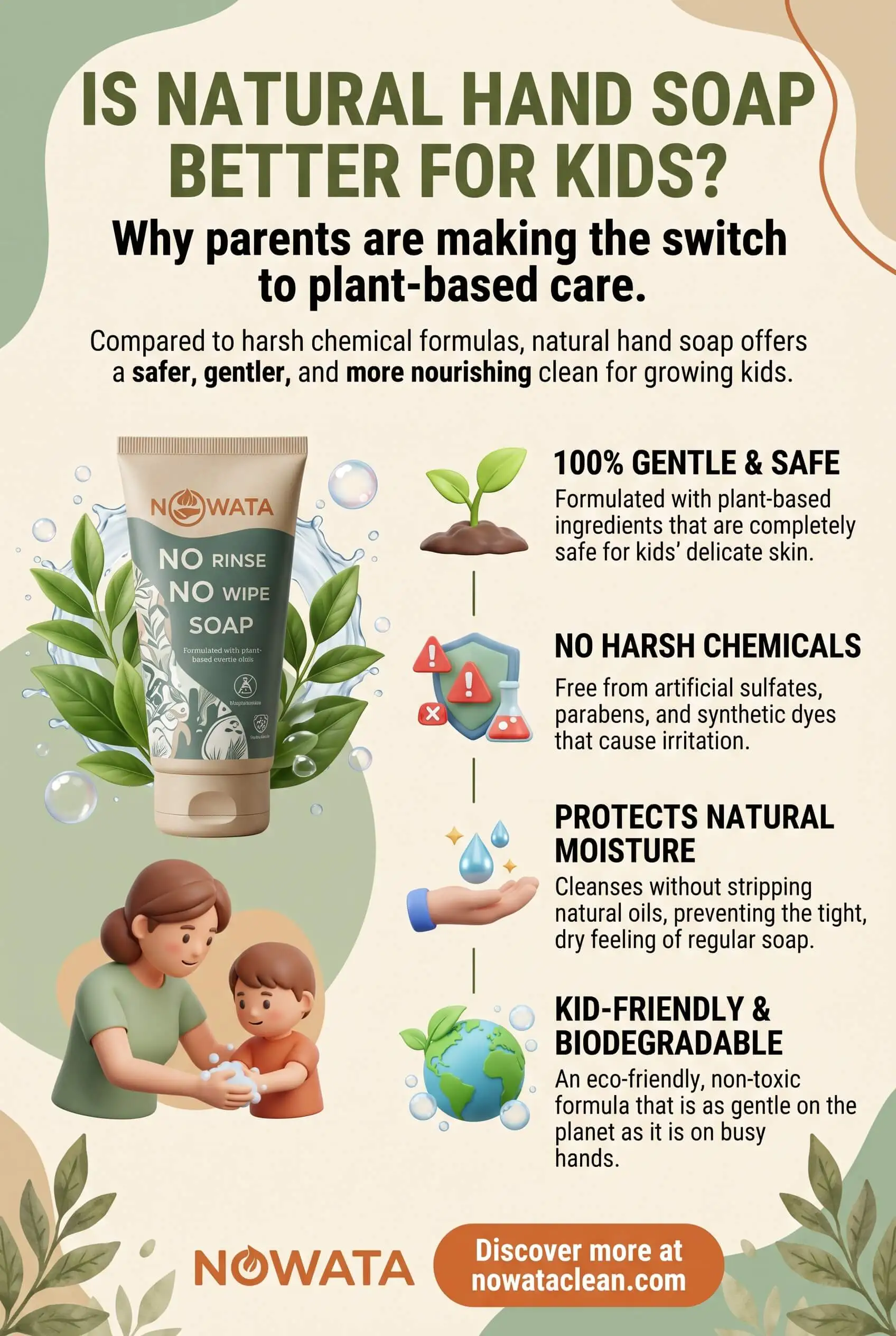
A short list of what's left out. Alcohol, parabens, sulfates, phosphates and PFAS are the ingredients NOWATA's doctor-founders exclude from their formula.
Removal, not just killing. Soap lifts germs, dirt and oil off the skin. When there's no sink, a rinse-free, plant-based soap that clumps grime so you can brush it away does the same job.
Proof behind the claims. Third-party lab testing and named founders or experts carry more weight than front-label buzzwords.
Bottom line: if you can't read and recognize every ingredient, keep looking.
Top Takeaways
"Natural" has no legal definition for soap. The FDA doesn't define it, so the ingredient list tells you far more than the front label.
Fragrance is the ingredient most worth avoiding for kids, and that includes essential oils, which come from plants and can still trigger skin allergies.
Antibacterial soap gives kids no extra protection. The FDA pulled 19 antibacterial ingredients from consumer washes in 2016 because they didn't outperform plain soap.
Shorter ingredient lists are easier on skin and easier to troubleshoot if a reaction does show up.
Soap and water is still the default. Keep a plant-based, rinse-free option for the times a sink isn't nearby.
What "Natural" and "Organic" Actually Mean on a Soap Label
The laws the FDA enforces don't define "natural" or "organic". A brand can print "natural" on a bottle that's mostly synthetic detergent and break no rule doing it. The agency goes a step further and tells makers not to assume plant ingredients are safe simply because they grew in the ground.
Organic is slipperier, since the word means one thing to a chemist and something quite different to a marketer. On a soap label, the only version with any oversight comes from the USDA's National Organic Program, which certifies how ingredients like plant oils were grown. That certification covers how a farm grew its crops and leaves your child's skin out of the picture. The FDA states plainly that an ingredient's source doesn't determine its safety, because plenty of plants contain allergens.
Most liquid "soap" isn't technically soap, either. True soap is fats or oils reacted with lye, and the Consumer Product Safety Commission oversees it. Most pump bottles hold detergent cleansers that the FDA regulates as cosmetics. Nothing wrong with that. It just means the word "soap" on the label is a name rather than a recipe.
Natural vs. Regular vs. Antibacterial Soap: How They Compare for Kids
For a child's skin, the differences come down to a few ingredient choices. Here's how each type usually lines up, though individual brands vary.
Typical natural soap cleans with plant-oil soap or plant-derived surfactants and tends to use fewer synthetic preservatives. Many are scented with essential oils or botanical extracts, and that's the part to watch, because those oils can still irritate.
Typical regular soap usually relies on synthetic detergents like sodium lauryl or laureth sulfate, a synthetic "fragrance" or "parfum," and preservatives such as parabens or methylisothiazolinone. It removes germs perfectly well. Fragrance and harsher sulfates are what tend to bother sensitive kids.
Antibacterial soap adds a germ-killing active on top of a regular formula, usually with fragrance too. The FDA found no evidence that it beats plain soap and water.
That last point surprises a lot of parents. In 2016 the FDA pulled 19 antibacterial ingredients, triclosan among them, from consumer hand and body washes after manufacturers couldn't show they worked better than ordinary soap. The American Academy of Pediatrics' parent site keeps it simple and recommends ordinary soap without antibacterial additives for kids.
Why Kids' Skin Reacts Differently
A child's skin barrier is still maturing, and kids wash constantly. Before snacks, after the bathroom, after petting the dog, after whatever just happened in the sandbox. Each wash is another round with every ingredient in that bottle.
Kids with eczema feel it most. The National Eczema Association names certain soaps and cleansers among common flare triggers in babies and toddlers, and it suggests packing a fragrance-free hand wash in a child's school care kit. If I could check only one ingredient, it'd be fragrance, whether it came from a lab or was pressed from lavender. When a child already has eczema or reacts to products, a pediatrician or pediatric dermatologist can point you to specific cleansers. And if allergies run in your house, our guide to what air purifiers can and can't do for allergies covers another big source of everyday triggers.
Where Natural Soap Wins and Where It Doesn't
Natural soap has earned part of its reputation, though not all of it.
Where Natural Soap Wins
The better natural soaps skip antibacterial additives entirely and usually rely on fewer synthetic preservatives and dyes. Their ingredient lists tend to be shorter, built on plant oils or plant-derived cleansers. Pair that with fragrance-free and you've found one of the gentlest options on the shelf.
Where "Natural" Can Still Irritate
Essential oils are the catch. Lavender, tea tree, citrus and peppermint all come from plants, and every one of them can irritate or sensitize skin. Houston dermatologist Rajani Katta has described seeing more allergic reactions to essential oils in "all natural" deodorants and toothpastes. A bottle that says "made with organic botanicals" can still be heavily scented, and plenty of "natural" products aren't as clean as their labels suggest. Natural and fragrance-free are separate claims, and for kids, fragrance-free is the one that counts.
How to Choose the Best All Natural Non Toxic Hand Soap for Your Child
Skip the front of the bottle and read the fine print. Here's what I check, in this order:
A full ingredient list. If a brand won't print everything, it goes back on the shelf.
Fragrance-free, essential oils included. "Unscented" sometimes means a masking fragrance, so scan for "fragrance," "parfum" and any named oil.
No antibacterial actives. Triclosan is gone from consumer washes, yet some products still lean on germ-killing additives. Plain soap handles the job.
A gentle cleanser near the top. Plant-oil soaps or milder surfactants beat sodium lauryl sulfate in the first few ingredients.
Preservatives you're comfortable with. Parabens and methylisothiazolinone are the two names many parents watch for.
The shortest list you can find. Fewer ingredients mean fewer chances for a reaction, and far easier detective work if one happens.
A patch test. Use a new soap on one small area for a few days before it becomes the household default.
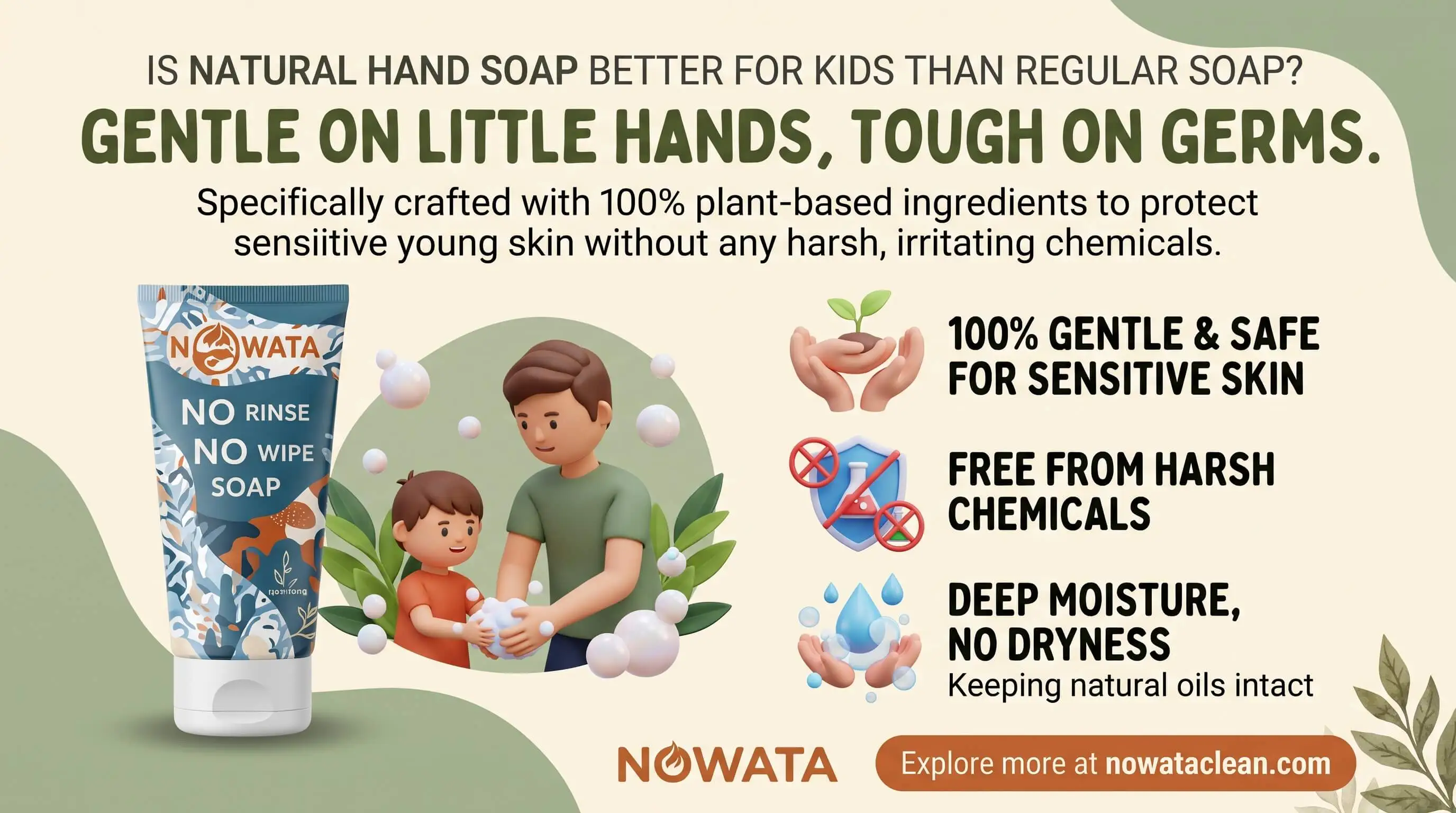
For a head start, NOWATA's guide to the best all natural non toxic hand soap runs through these same label checks. Two doctor-parents wrote it, a dentist and a biomedical engineer who spent two years building a plant-based formula and tested it on their own kids first.
Soap and water at the sink is still the default. The trouble is everywhere else, like the car after practice or the picnic table at the park, and that's where a rinse-free, plant-based option earns a spot in the diaper bag. Our post on keeping kids' hands clean when there's no sink walks through that routine.
"Reading ingredient labels is a big part of what I do for this site, and the biggest lesson so far is that the front of a bottle belongs to the marketing team. The back is where you find out what you're actually buying. When I'm judging a soap for a child, I look for what's missing, which means no fragrance of any kind and no antibacterial additives, all on a list short enough to read in the aisle. In my experience, the gentlest soap on the shelf is rarely the one shouting 'gentle.' It's usually the plain bottle nobody bothered to decorate."
7 Essential Resources
These are the pages I keep open when comparing labels. Each answers something the front of the bottle won't.
FDA: Frequently Asked Questions on Soap. Explains how true soap differs from detergent cleansers and why "natural" has no legal meaning.
FDA: "Organic" Cosmetics. Covers where the USDA's organic program fits, plus the FDA's blunt answer on whether organic ingredients are automatically safer. They aren't.
AAP HealthyChildren: Hand Washing, A Powerful Antidote to Illness. Pediatricians on when kids should wash and why ordinary soap without antibacterial additives is the better choice.
National Eczema Association: Eczema in Children. How eczema shows up in babies and toddlers, and which everyday products, soaps included, can set off a flare.
National Eczema Association: Contact Dermatitis. A straightforward list of common skin triggers, with fragrances and preservatives like methylisothiazolinone and parabens on it.
MDedge: Expert Shares Contact Dermatitis Trends. A dermatologist's case notes on reactions to essential oils in "all natural" products, from deodorant to toothpaste.
Medical Republic: Watch for Fragrance Allergies in Kids With Eczema. Pediatric patch-test research that names fragrance as a leading cause of skin allergy in children, and notes that organic products can contain fragrance too.
Supporting Statistics
About 2,100 products had to change. When the FDA gave makers one year to drop 19 antibacterial ingredients from consumer washes in 2016, an agency spokeswoman estimated the rule touched about 2,100 products (RAPS). The "antibacterial" label never gave kids extra protection over plain soap.
Roughly 59% of children tested had a skin allergy. In an Australian study of kids referred for suspected allergic contact dermatitis, about 59% had a positive patch test, and fragrance mix ranked among the top allergens in both age groups (Medical Republic). For a sensitive child, fragrance-free is the most useful filter you've got.
One preservative hit 13.4%. Methylisothiazolinone was the second most common allergen in North American Contact Dermatitis Group patch testing, at a 13.4% positive rate, and it turns up in many skin care products (MDedge). Fragrance gets the attention, but preservatives deserve a glance on the label too.
Final Thoughts and Opinion
"Natural" is a marketing word. After enough time with ingredient lists, I think parents deserve a sturdier standard than that, and it isn't complicated: fragrance-free with essential oils included, no antibacterial additives, a gentle cleanser, and a list you can read without a chemistry degree.
Plenty of natural soaps meet that bar, and when they do, they're a great pick for kids. A natural soap packed with lavender and tea tree oil doesn't, however green the label looks. In those cases a plain, unscented regular soap will often be easier on sensitive skin.
I'd also push back on the idea that swapping soaps is the whole job. Twenty seconds of scrubbing with plain soap and water still does most of the work. Where families can genuinely do better is the stretch away from the sink, when kids eat snacks with hands that just touched the playground slide. A plant-based, rinse-free cleanser that lifts grime off rather than leaving it behind makes a difference there.
My advice is to judge any soap by its ingredient list and one gut check. Would you be comfortable seeing those little fingers go straight into a mouth afterward?
Frequently Asked Questions
Is natural soap safe for toddlers?
Usually, yes, if it's fragrance-free and has no antibacterial additives. The word "natural" doesn't promise either, and many natural soaps contain essential oils that can irritate young skin. Read the full ingredient list, try a patch test first, and stop using any soap that leaves redness or dry patches behind.
Does natural hand soap kill germs as well as regular soap?
It removes them just as well, and removal is the point. Any soap works by lifting germs, dirt and oil off the skin so they rinse down the drain. The FDA found antibacterial washes did no better than plain soap and water, so a natural soap used for a full 20 seconds gets the job done.
Are essential oils safe in kids' hand soap?
Not always. Lavender, tea tree, citrus and peppermint oils are natural, yet dermatologists report more allergic reactions to them, especially on skin that's already irritated or prone to eczema. For young kids, I'd start with a fragrance-free soap that leaves essential oils out.
Is organic soap the same as natural soap?
No. On a soap label, "organic" usually describes how plant ingredients were grown under the USDA's National Organic Program, while "natural" has no legal definition. Neither word tells you whether the soap is fragrance-free or gentle enough for a child.
What hand soap is best for kids with eczema or sensitive skin?
Look for a fragrance-free, gentle cleanser with a short ingredient list and no antibacterial additives, parabens or methylisothiazolinone. The National Eczema Association's Seal of Acceptance can narrow the choices. Our guide to soap for eczema-prone skin goes further on gentle formulas, and if flares keep coming back, talk to your pediatrician.
Pick a Soap Your Kid's Skin Can Live With
Your child's hands get washed more than almost anything else in the house, so the soap deserves a closer look than its front label invites. Read the fine print and pass on anything with fragrance or antibacterial additives. The right pick is a short, plant-based formula you'd be fine with ending up in a toddler's mouth. For the playground and every other spot without a sink, take a look at NOWATA's plant-based, rinse-free soap, developed by two doctor-parents who tested it on their own children before sharing it with other families.
