The best soap for diabetics cleans your feet without stripping their natural oils. Soft skin resists the small splits where trouble starts, and a nightly wash is also your best chance to look closely at every inch of it before bed.
TL;DR Quick Answers
Best soap for diabetics
The best soap for diabetics is a mild, fragrance-free, pH-balanced cleanser, close to skin's natural 4.5 to 5.5, that cleans without stripping natural oils. Use it once a day with lukewarm water, and keep antibacterial, deodorant and perfumed soaps out of your daily routine.
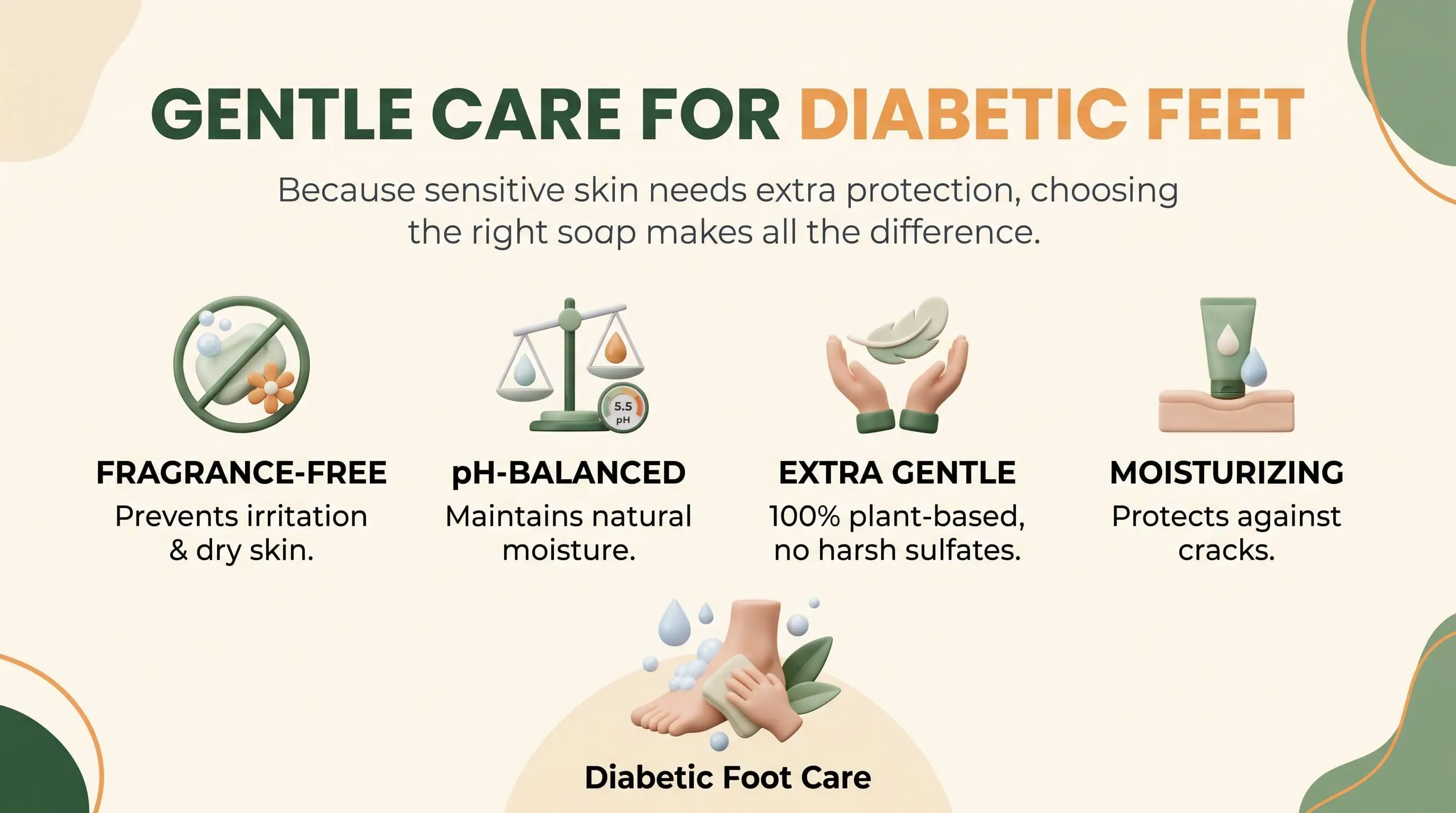
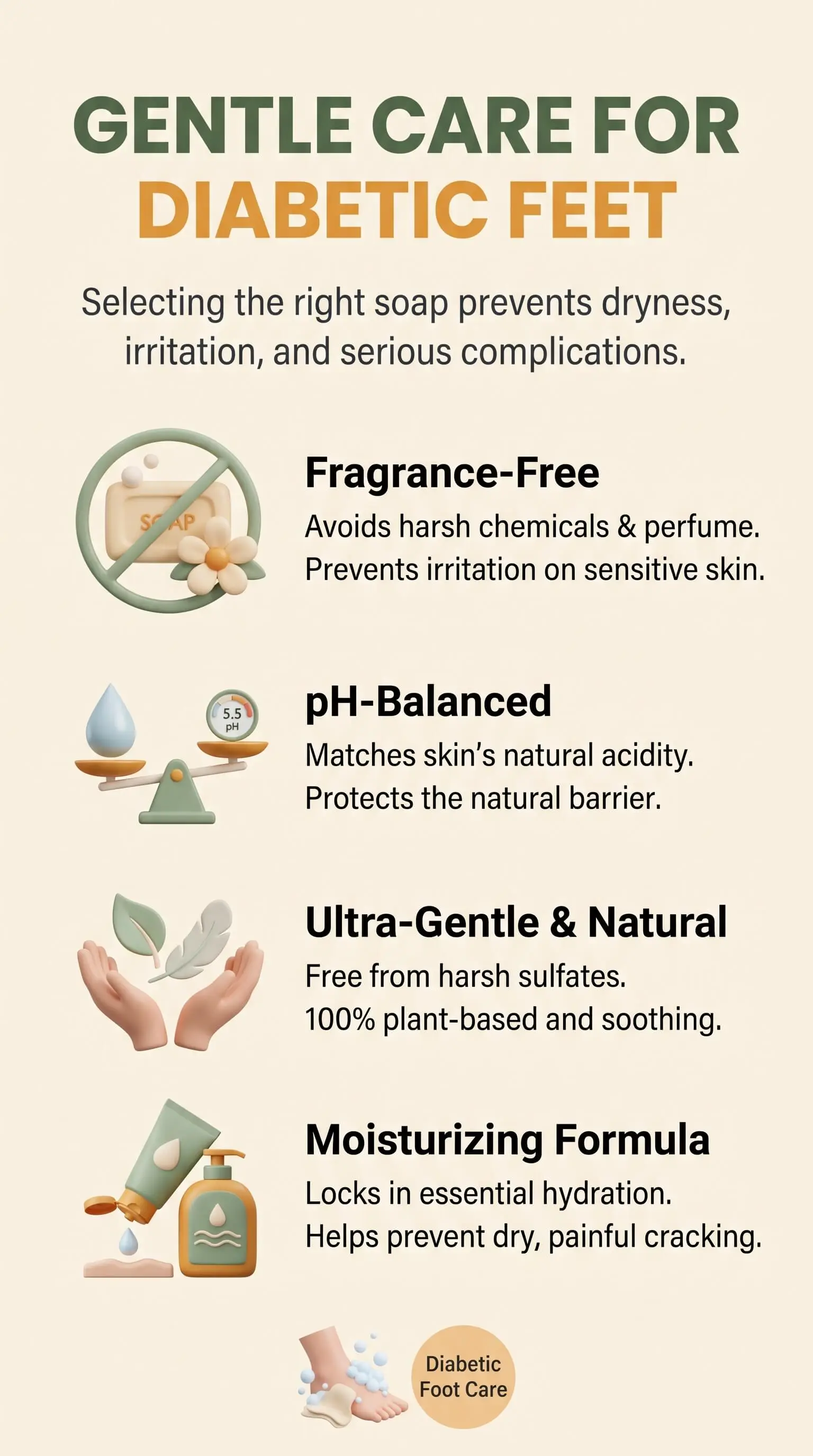
Look for: fragrance-free, pH-balanced, alcohol-free, sulfate-free and dye-free, with glycerin or ceramides
Avoid: daily antibacterial or antiseptic soap, deodorant bars, scented body washes, scrubs and Epsom salt or iodine soaks
Water: lukewarm, tested with your wrist or elbow—never your foot
After washing: pat dry, dry between every toe, and moisturize the tops and soles but not between the toes
The ten-minute test: if your skin feels tight ten minutes after you wash, that soap took more than it gave
Hands count too: the hands that wash and check your feet need the same fragrance-free, pH-balanced standard
Call a podiatrist: for any sore, blister, redness, swelling or crack that isn't healing
Top Takeaways
Mild, fragrance-free, pH-balanced soap protects the skin barrier on diabetic feet.
Antibacterial, deodorant and perfumed soaps strip natural oils, so keep them out of your daily routine.
How you dry your feet matters as much as what you wash them with, especially between the toes.
Moisturize the tops and soles every day and leave the spaces between your toes alone.
Washing and checking go together: look over both feet each night and call your podiatrist about anything that isn't healing.
Why Diabetic Feet Need a Gentler Soap
High blood glucose damages nerves and blood vessels over time, and your feet feel it first—or don't feel it, which is the problem. Diabetic neuropathy dulls sensation, so a blister, burn or crack can go unnoticed. Poor circulation slows healing once the skin breaks. Diabetic feet also tend to sweat less, which leaves the skin drier and quicker to split, one of several skin conditions associated with diabetes mellitus.
Soap enters the picture right at the skin's surface. Your outer layer carries a slightly acidic film called the acid mantle, sitting around pH 4.5 to 5.5, and it holds moisture in. Harsh, high-pH or heavily fragranced cleansers wash it away. From there the chain is short: stripped skin dries out, dry skin cracks, and cracks give bacteria and fungus a way in.
Soap won't repair nerve damage or circulation. What a gentle one does is stop piling stress onto skin that's already working overtime.
What Makes a Soap Safe for Diabetic Feet?
A mild soap for diabetic feet is fragrance-free and dye-free, sits close to your skin's natural pH and keeps antibacterial additives out of your everyday routine. Labels don't always make that easy to spot, so it pays to read past the front of the bottle.
What to Look For
Every quality that makes a cleanser safe for your feet also defines the best soap for diabetics anywhere on the body, starting with the hands that do the washing:
Fragrance-free: "unscented" can still hide a masking fragrance, so check the ingredient list.
pH-balanced: close to skin's 4.5 to 5.5 range, which keeps the acid mantle intact.
Alcohol-free and sulfate-free: SLS and SLES strip oils fast.
Moisturizing: glycerin or ceramides help skin hold on to water.
Dye-free and paraben-free: every additive you remove is one less chance for irritation.
A short ingredient list you can actually read: when most of it is there for scent or color, your skin isn't the priority.
What to Avoid
Antibacterial or antiseptic soap as a daily wash. It dries skin out. Save it for when your clinician tells you to use it.
Deodorant bars and heavily perfumed body washes. Fragrance is a common trigger for irritation and contact dermatitis.
Exfoliating scrubs and grainy foot washes. Scrubbing can break skin you may not be able to feel.
Foot soaks with Epsom salt, iodine or bleach. Healthwise guidance tells people with diabetes to keep strong antiseptic soaps and chemicals off their feet.
Over-the-counter corn, callus and wart removers. Let your podiatrist handle these.
MedlinePlus puts it plainly: strong soaps may damage the skin.
Soap Types Compared for Diabetic Feet
Fragrance-free mild cleanser or syndet bar: yes. It cleans gently and stays close to your skin's natural pH.
Moisturizing fragrance-free bar: yes. It helps skin hold moisture without adding irritants.
Antibacterial or antiseptic soap: not for daily use. It dries the skin, so save it for when a clinician directs.
Deodorant soap: no. Its fragrance and harsh detergents strip natural oils.
Scented body wash: no. Fragrance irritates sensitive skin more often than almost anything else on the label.
Medicated or exfoliating foot scrub: only with your clinician's approval. It can damage skin you may not feel.
Foot soak salts: no. Soaking softens and dries the skin and raises your risk of infection.
How to Wash Diabetic Feet, Step by Step
Wash once a day, ideally in the evening, so your foot check happens right after.
Run lukewarm water and test it with your wrist, elbow or a thermometer—never your foot. Reduced feeling can hide a burn.
Lather a small amount of mild soap and gently wash the tops, soles, heels and between your toes with your hands or a soft cloth. Don't scrub.
Rinse well so no soap residue sits between your toes.
Pat dry with a soft towel instead of rubbing. Dry carefully between every toe, because moisture left there invites fungus.
Moisturize the tops and soles with a cream or ointment, which the AAD says heals dry skin better than lotion. Leave the spaces between your toes bare.
Check every surface. Use a mirror or ask someone to help you see your soles. Look for cuts, blisters, redness, warmth or swelling, then pull on clean socks.
Should you soak your feet? Skip it. Soaking softens the skin, strips its protective oils and leaves moisture behind, and health care providers don't advise long soaks for people with diabetes.
Your Hands Wash Your Feet, So Hold Them to the Same Standard
Most foot-care guides skip this part. Your hands do the washing, the moisturizing and the nightly check—and diabetic hands crack too. Scrub them with a harsh, perfumed soap ten times a day and you bring dry, split skin to a job that needs a gentle touch.
Two doctors and parents, Dr. Ruslan Maidans, DDS, and Dr. Yalda Shahriari, PhD in Biomedical Engineering, created NOWATA™ to meet that standard for hands. The formula is plant-based, fragrance-free, alcohol-free and pH-balanced. It's also rinse-free, so you can clean your hands before and after foot care without another round of hot water and harsh lather. NOWATA™ is made for hand cleansing, so for your feet, stay with a mild, fragrance-free wash and the routine above.
Dealing with eczema on your hands as well? Our guide to gentle soap for diabetics with eczema-prone skin goes further into what to look for.
When to Call Your Doctor or Podiatrist
Gentle soap supports good foot hygiene, but it can't stand in for medical care. Call your doctor or podiatrist if you notice:
A cut, blister or sore that isn't healing
Redness, warmth or swelling anywhere on the foot
Cracked heels that bleed or feel tender
Thick, yellowed or lifting toenails
Peeling, itching or cracking between the toes, which may point to athlete's foot
Corns or calluses, which a professional should treat
Even when nothing looks wrong, book a comprehensive foot exam at least once a year.
"We started making soap for our own family, and the first thing we learned was how much a label can hide. 'Unscented' can still mean masking fragrance, and 'gentle' can still mean sulfates. So we tell people with diabetic skin to read the ingredient list like a nutrition label—short, recognizable and free of anything that's only there for scent or color. Then notice how your skin feels ten minutes after you wash. If it feels tight, that soap takes more than it gives."
7 Essential Resources
1. Start Here: NIDDK on Diabetes and Foot Problems
The National Institute of Diabetes and Digestive and Kidney Diseases explains how diabetes affects your feet and what belongs in a daily foot-care plan. Read it first if you're building a routine from scratch.
Source: NIDDK, Diabetes & Foot Problems
2. The Daily Checklist: MedlinePlus on Taking Care of Your Feet
The National Library of Medicine lays out a plain self-care checklist, including daily washing with lukewarm water and mild soap. It's the clearest short reference we found.
Source: MedlinePlus, Diabetes: Taking Care of Your Feet
3. The Dermatologist's View: AAD Skin Care for People With Diabetes
Dermatologists cover moisturizing, daily foot checks and how to treat minor wounds. Turn here when dryness is the main problem.
Source: American Academy of Dermatology, Skin Care for People With Diabetes
4. Post It in Your Bathroom: Healthwise Steps for Foot-Washing
This printable routine covers water temperature, drying and the products to keep away from your feet.
Source: Healthwise via Michigan Medicine, Diabetes: Steps for Foot-Washing
5. Why the Yearly Exam Matters: CDC on Promoting Foot Health
The CDC explains the foot conditions diabetes can cause and why a comprehensive foot exam every year catches what daily checks miss.
Source: CDC, Promoting Foot Health
6. The Numbers Behind the Advice: AHRQ Diabetic Foot Ulcer Data
The Agency for Healthcare Research and Quality tracks how often foot ulcers and amputations occur in people with diabetes. It puts the stakes of daily foot care in plain figures.
Source: AHRQ via NCBI Bookshelf, Incidence of Diabetic Foot Ulcer and Lower Extremity Amputation
7. Practical Tips: University of Illinois Extension on Foot Care and Diabetes
Short, practical guidance on washing, drying and moisturizing, plus a list of what to check for each day.
Source: University of Illinois Extension, Foot Care and Diabetes
These seven trusted resources explain how daily foot washing, gentle fragrance-free soap, proper moisturizing and regular foot checks can help people with diabetes prevent dryness, cracks and serious foot complications. Alongside these essential foot-care habits, air purifiers can help reduce airborne dust and allergens in the home, supporting a cleaner indoor environment for people with sensitive skin.
3 Statistics
Up to 15 Percent of People With Diabetes Will Have a Foot Ulcer in Their Lifetime
Key finding from the Agency for Healthcare Research and Quality: 10 to 15 percent of people with diabetes will have at least one foot ulcer during their lifetime.
What this means in practice: a nightly wash, a careful dry and a close look are how you catch small problems while they're still small.
Untreated Foot Ulcers Cause More Diabetes-Related Amputations Than Anything Else
Key finding from MedlinePlus: untreated foot ulcers are the most common reason for toe, foot and leg amputations in people with diabetes.
What this means in practice: a small crack deserves your attention the day you spot it.
Nearly Half of People With Diabetic Neuropathy May Feel No Symptoms
Key finding from the CDC: nearly half of people with diabetic peripheral neuropathy may not have symptoms.
What this means in practice: pain won't always warn you, so the look-and-check step has to happen every single day.
Final Thoughts and Opinion
When we lined up the foot-care guidance from NIDDK, MedlinePlus, the AAD and Healthwise while writing this guide, the agreement surprised us. All four tell you to wash in lukewarm water with mild soap, pat your feet dry, dry between your toes, moisturize everywhere except there, skip the soak and keep harsh chemicals away.
None of them spells out what "mild" actually means, and that's the gap we set out to close. Our view is simple. The best soap for diabetics is the one you barely notice—no scent, no sting, no tight feeling afterward. Gentle doesn't have to mean ineffective, because a good soap does its job and gets out of the way.
We'd push back on the idea that soap is the whole answer, though. How you wash, how you dry and whether you actually look at your feet every night matter as much as the bottle you buy. Get the routine right and choosing the soap becomes the easy part.
Frequently Asked Questions
Q: What is the best soap for diabetics to use on their feet?
A: A mild, fragrance-free, dye-free cleanser with a pH close to skin's natural 4.5 to 5.5 range. Glycerin or ceramides earn bonus points because they help skin hold moisture. Keep antibacterial, deodorant and perfumed soaps out of your daily routine, and wash with lukewarm water rather than hot.
Q: Can diabetics use antibacterial soap on their feet?
A: Not as an everyday soap. Antibacterial and antiseptic formulas tend to dry the skin, and dry skin cracks more easily. Foot-care guidance for people with diabetes advises against strong antiseptic soaps, so use one only when your doctor or podiatrist recommends it for a specific problem.
Q: Should people with diabetes soak their feet or use Epsom salt?
A: No. Soaking softens the skin, strips its protective oils and leaves moisture behind, which raises the risk of cracks and infection. Health care providers don't advise long soaks, and Healthwise guidance names Epsom salt and iodine among the chemicals to keep off diabetic feet.
Q: What pH should soap be for diabetic skin?
A: Close to skin's natural range of about 4.5 to 5.5, so look for "pH-balanced" on the label. Many traditional bar soaps run much higher, and that disrupts the acid mantle that helps skin hold moisture. A pH-balanced cleanser keeps diabetic skin from drying out after every wash.
Q: Should you put lotion between your toes if you have diabetes?
A: No. Moisturize the tops and soles of your feet daily, but leave the spaces between your toes dry. Moisture trapped there can feed fungal growth, including athlete's foot. Dry between your toes carefully after every wash, and ask your provider before you use any cream there.
Q: How often should diabetics wash and check their feet?
A: Every day, ideally together in the evening. Look at the tops, soles, heels and between the toes for cuts, blisters, redness or swelling. A mirror or a helping hand makes the soles easier to see. On top of that, get a comprehensive foot exam at least once a year.
Clean Feet, Calm Skin: Make Gentle Your Daily Standard
Your feet don't need anything fancy—just lukewarm water, a mild fragrance-free soap, a soft towel and two minutes of your attention every night. Hold your hands to the same standard, since they're the ones doing the work. Give them a cleaner made without fragrance, alcohol or sulfates with NOWATA™ fragrance-free, pH-balanced hand soap, made by two doctors and parents and available at NowataClean.com. For frequent handwashing, the best waterless hand soap can offer a convenient way to keep hands clean while reducing repeated exposure to water.
Pass this guide along to anyone in your life who manages diabetes.
